

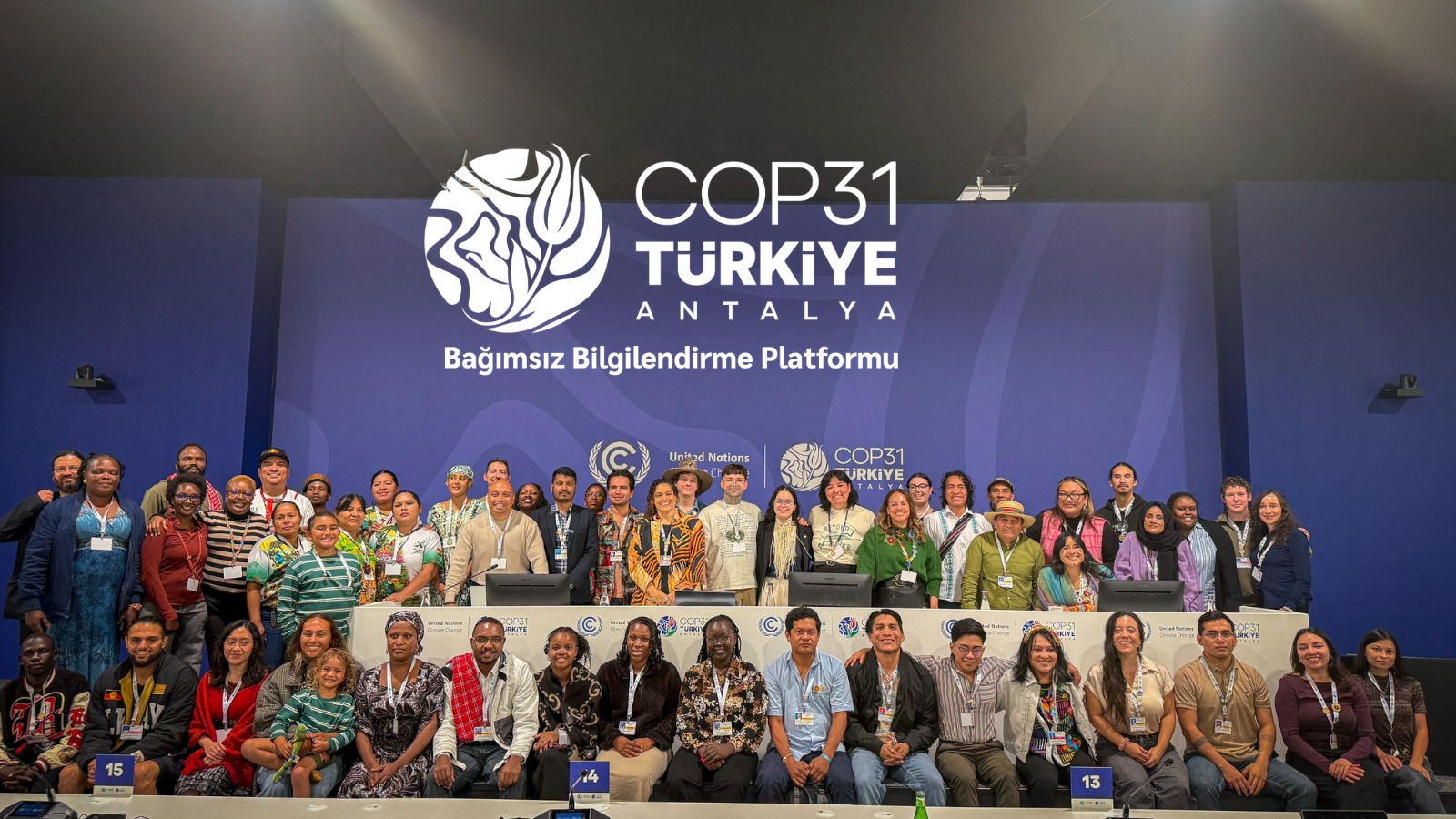
COP31, the United Nations Climate Change Conference, was held in Antalya, Türkiye, from 9 to 22 November. Every morning, we met in the Indigenous Caucus before heading to the different negotiating rooms. We came from the seven sociocultural regions: (1) Africa, (2) the Arctic, (3) Asia, (4) Latin America and the Caribbean, (5) Eastern Europe, the Russian Federation, Central Asia and Transcaucasia, (6) North America and (7) the Pacific. According to the co-chair of the International Indigenous Peoples’ Forum on Climate Change (IIPFCC), the Caucus brought together more than 350 people during the first week. There, we reached consensus on the positions we presented to governments.
The Caucus is a space where we can reach agreement, share what is happening across the negotiating groups, review changes to official texts and agree on the priorities we will defend each day. A single word disappearing from a paragraph in these texts could occupy much of our attention. For instance, someone reading a United Nations decision might not notice the absence of the word “consent”. But for an Indigenous People whose territory is the proposed site of a mine, it matters from day one.
As Indigenous observers, we were able to intervene, follow the negotiating groups, propose amendments and seek out government delegations willing to defend them. The final decision rested with the Parties. Between the preparatory meetings on 8 November and the closing plenary on Sunday, 22 November 2026, we saw which proposals gained support and which were lost with each new version of the text.
What we brought to the negotiations
As Peoples living in very different circumstances and inhabiting vastly different territories, we arrived with six priorities agreed upon collectively.
- We called for all climate action to respect the United Nations Declaration on the Rights of Indigenous Peoples.
- We advocated for concrete measures to limit warming to 1.5°C.
- We demanded protection for those facing threats and reprisals for defending territories, lands and waters.
- We called for financial and technical resources to reach our territories and organisations directly, particularly grassroots organisations.
- We called for the full participation of all seven regions in decision-making.
- We demanded respect for our protocols whenever our sciences and our own knowledge systems are drawn upon.
Our collective voice includes women, youth, persons with disabilities, gender-diverse people and those who safeguard and transmit the knowledge of each Indigenous People around the world.
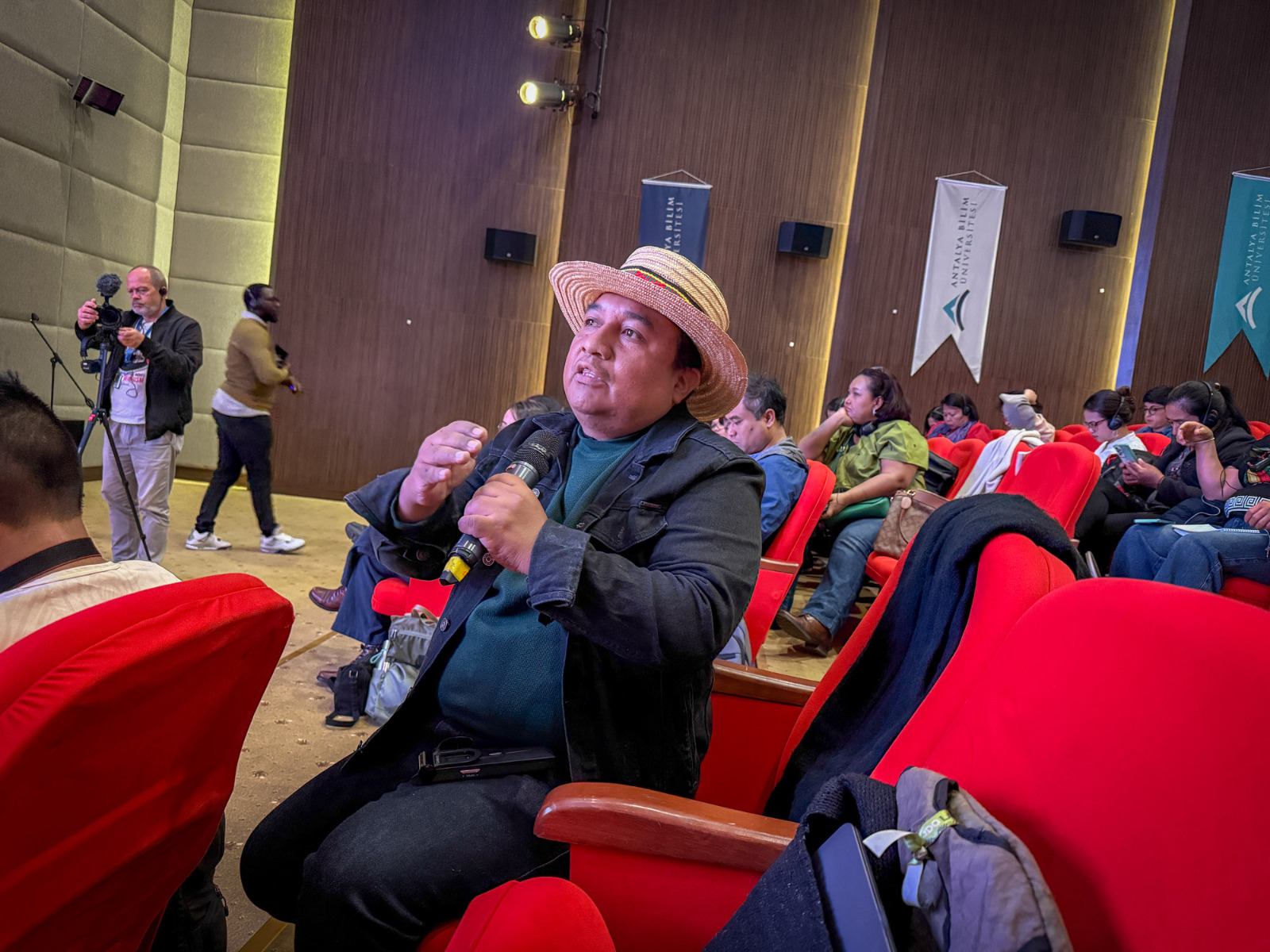
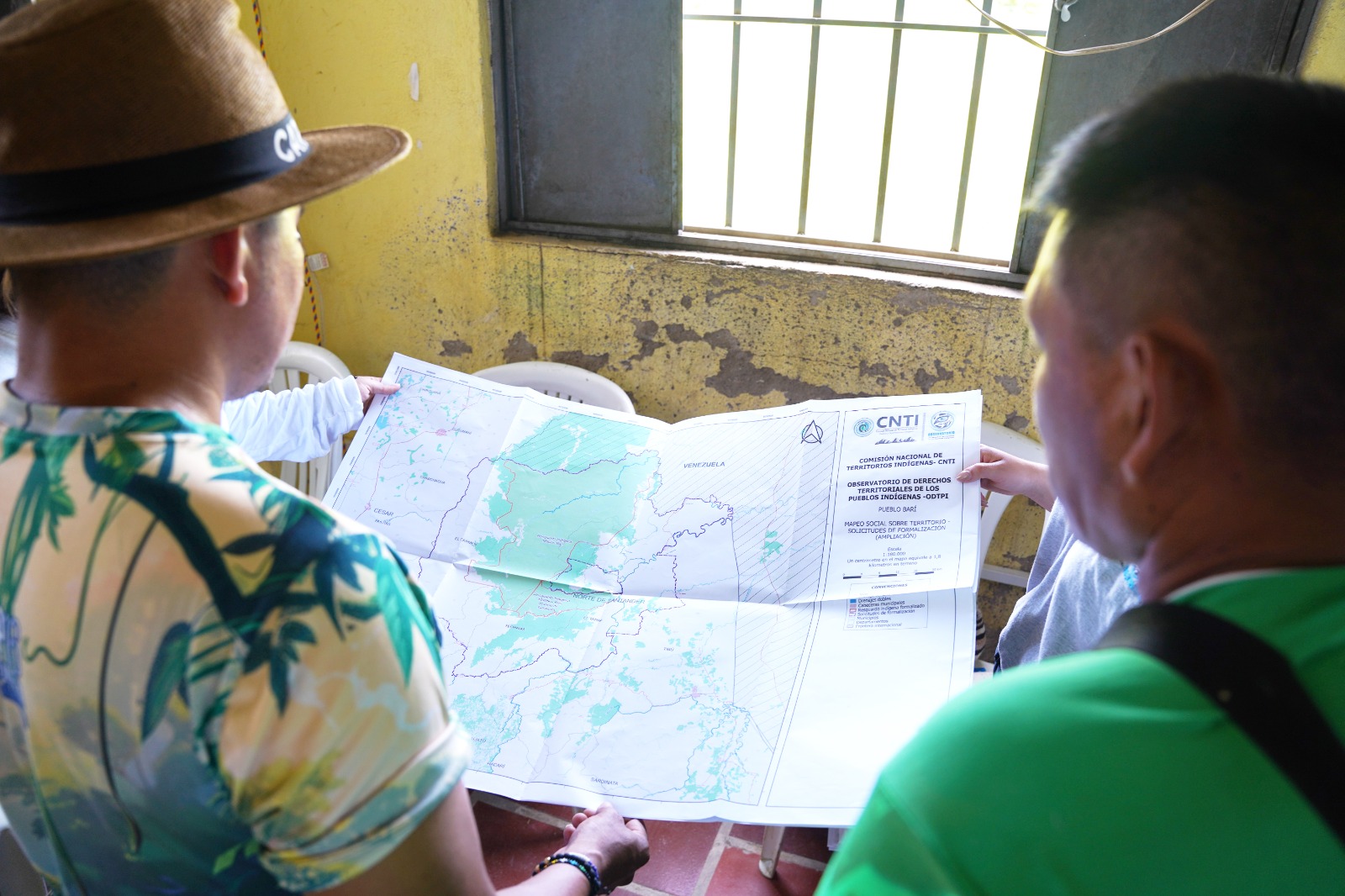
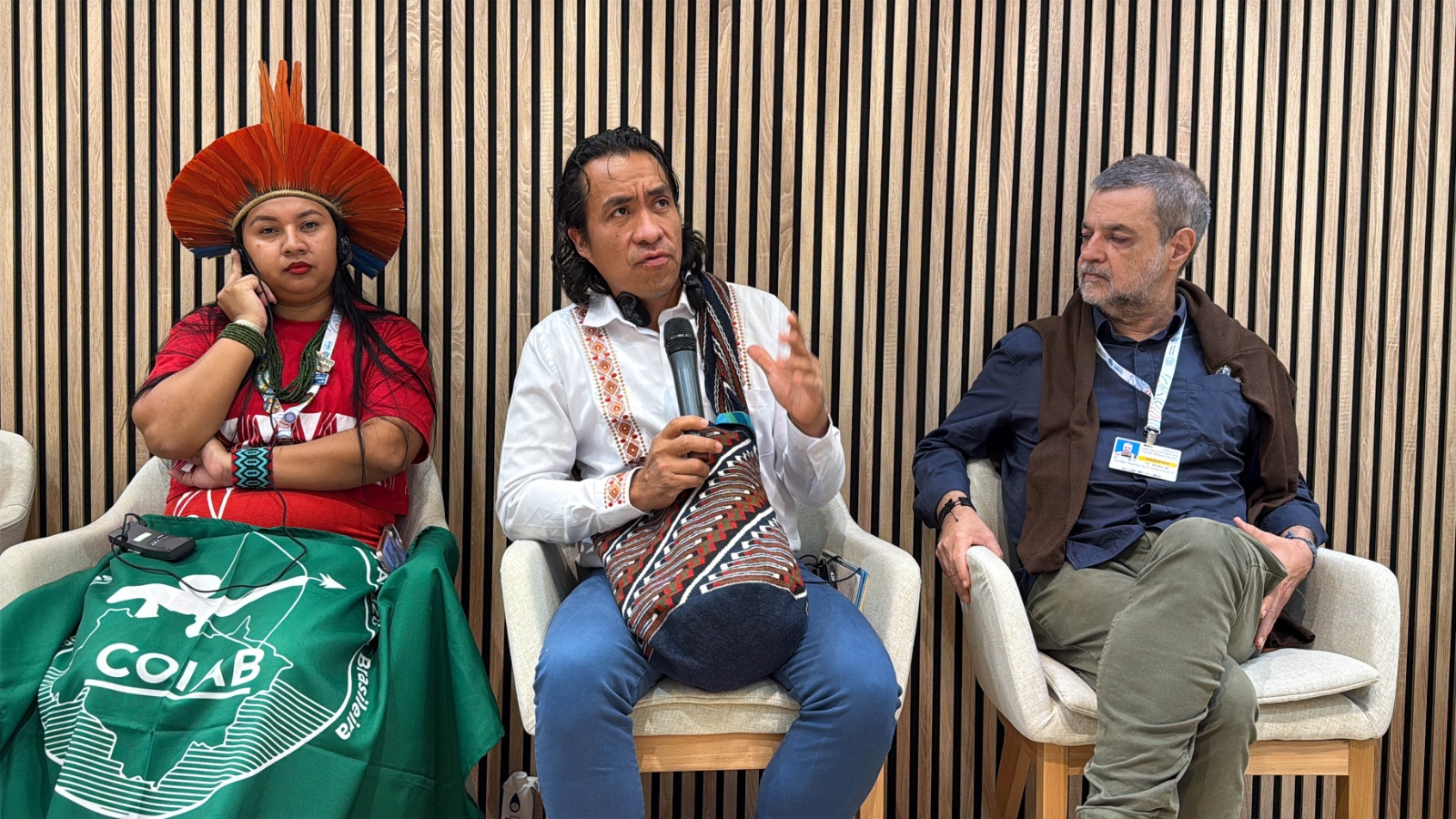
The Indigenous Peoples’ Pavilion in the Blue Zone gave us an opportunity to discuss these priorities from the perspective of our territories. According to the IIPFCC’s assessment, 70 activities took place: 45 in the first week and 25 in the second, in addition to the opening event and excluding the daily Caucus meetings. For instance, at one event in the Pavilion, a question raised by the Maasai pastoralist Peoples of Kenya was discussed: when drought forces a family to move with its livestock, what happens to the children who need to keep going to school? At another event, we discussed a different concern that we had brought from Colombia. When a People draws its own maps to protect its territory, who decides what information may be shared and what must remain under the stewardship of its authorities? In both cases, the voices of those who know the territory and are responsible for it matter. [8]
Those of us participating from Latin America and the Caribbean discussed proposed criteria for choosing our representatives. Deciding among ourselves how to exercise our representation is closely related to what we demand of governments when we call for participation on our own terms. We followed, among others, the negotiations on just transition, adaptation and finance. In successive drafts of the conference’s political pact, we saw a distinction that we, as an Indigenous movement, have worked for years to uphold begin to disappear.
In those drafts, we once again found Indigenous Peoples and local communities grouped together in a single phrase. We may share a river, face the same flood and work together to restore a watershed. We recognise the ties that local communities have to the places they inhabit and the value of their knowledge. In identifying ourselves as Indigenous Peoples, we are also stating who we are politically: Peoples with the right to self-determination, with authorities chosen according to our own procedures and with the collective right to determine priorities for our lands and territories. The distinction has consequences. If a project affects our river, a meeting open to the entire population may identify shared concerns. That meeting alone does not fulfil the State’s obligation to consult our Peoples in good faith through our representative institutions in order to obtain our free, prior and informed consent before approving that project. [7, 9]
What we managed to defend is most clearly reflected in the decision on just transition. In paragraph 7(l), concerning industrial transformation, governments recognised our knowledge systems, referred to the UN Declaration and expressly mentioned free, prior and informed consent. They also recognised the importance of addressing the impacts that industrial activities and related infrastructure may have on our lands, territories, resources and livelihoods. The following paragraph refers to equitable benefit-sharing and participation from the outset in the design of arrangements. These are provisions that Indigenous authorities and leaders can draw upon when a government presents them with an industrial project.
Just a few lines further down in the same text, the limits of that progress become apparent. In paragraph 7(n), which directly addresses critical minerals for the energy transition, governments spoke of value chains, economic opportunities and countries’ capacity to process their raw materials. The explicit human rights safeguard we advocate for was left out. Consider the journey of a mineral, from the land from which it is extracted to the industry that uses it. The decision recognises consent when discussing industry, but remains silent when discussing the chain that begins at the mine. Our rights remain in force. This omission demonstrates a lack of willingness to make them explicit there as well. That is why, in its closing statement, the Indigenous Caucus welcomed the first of these paragraphs and so firmly challenged the omission of those rights in the second. [3, 7]
A similar situation arose in the discussion about who would lead the just transition mechanism agreed a year earlier at COP30 in Belém, Brazil. In Antalya, it was decided that the mechanism would be operationalised in phases. Submissions may be made until 15 March 2027. In June, the technical bodies are to develop its functions and rules, with a view to a decision in November. The question of dedicated spaces for Indigenous Peoples, which we have been demanding, remains open. [2, 3]
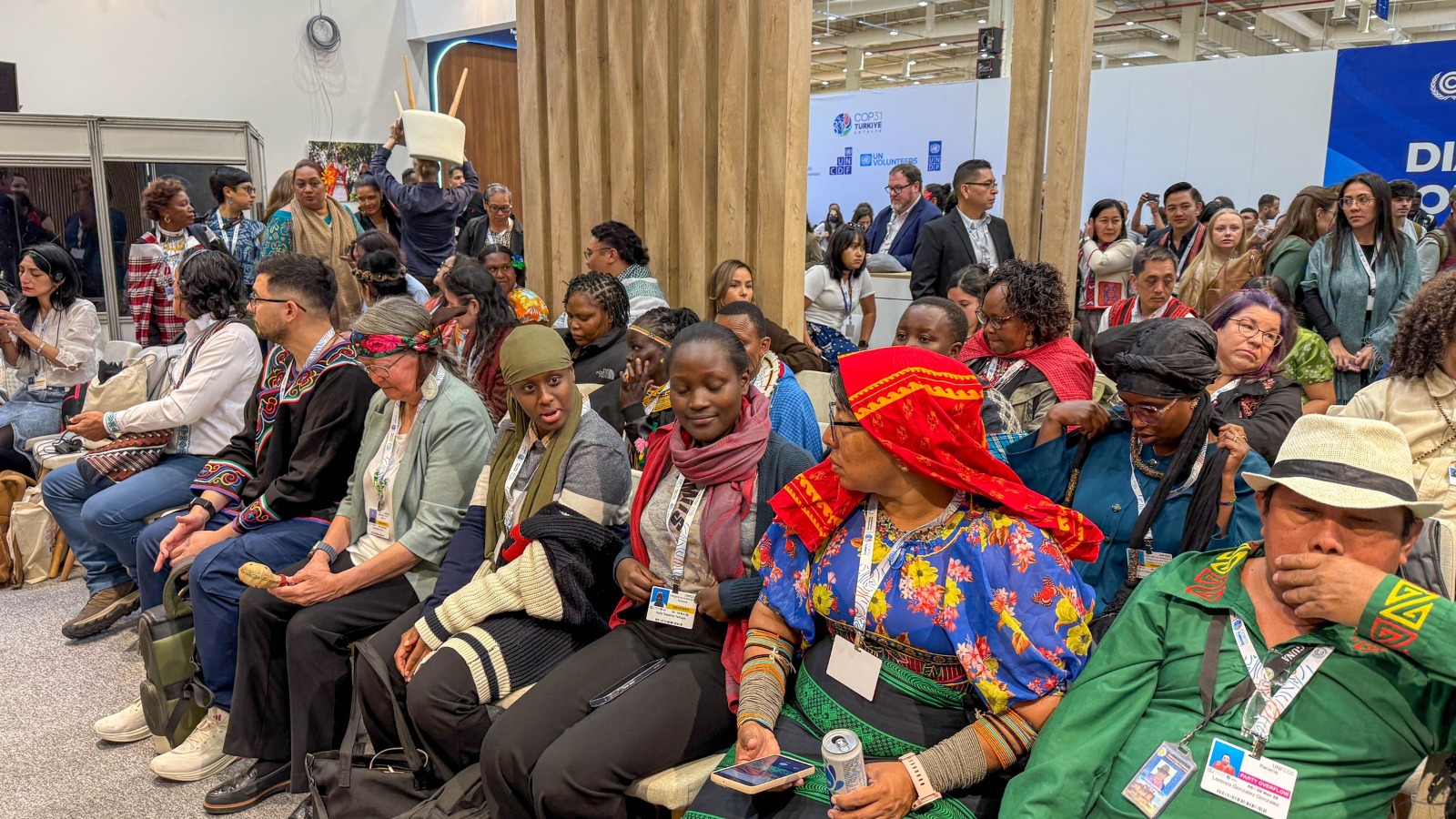
Who counts the losses, and who receives the resources?
Let us return to the schooling of Maasai children. If a government measures drought in terms of rainfall, while a People also measures it by the time its children spend away from school, who determines the indicators matters a great deal. At COP30 in Belém, indicators were agreed upon to assess climate change adaptation. In Antalya, a technical group was established to clarify how they should be measured. Its members will be nominated by Parties through the regional groups, with additional nominations from least developed countries and small island developing States. There will also be spaces open to observers. However, the Indigenous Caucus was not given the authority to directly nominate or appoint a member. [4, 5, 8]
For families who must move with their herds during a drought, measuring the damage is only the beginning. Resources are also needed to maintain access to water, food and children’s education throughout the emergency. In a joint letter to ministers, Indigenous organisations and other groups called on developed countries to provide developing countries with at least USD 120 billion annually for adaptation. They demanded a public roadmap through which contributions and compliance could be verified. In Antalya, governments recalled the goal agreed in Belém of at least tripling adaptation finance by 2035. The agreement did not establish USD 120 billion as an annual floor, nor did it set out how the goal of tripling finance would be achieved. For our Indigenous territories, the question of when and through what channels that support will arrive remains unanswered.
For our authorities, funding has a specific purpose. It may be used to restore a water source, sustain a territorial monitoring team or respond to a flood. When a fund publicly reports that it has allocated resources to Indigenous Peoples, we need to ask how much of that money our organisations managed and how much remained in the hands of intermediaries. That is why we call for direct, predictable finance, not in the form of loans, and transparent reporting on what reaches our territories. [6, 7]
In Antalya, governments reiterated guidance agreed in Belém. They encouraged the Board of the Green Climate Fund to improve direct access to its resources for non-governmental entities, expressly mentioning Indigenous Peoples. This enables us to ask the Board to explain which barriers it has removed. Through the Caucus, we called on the Fund to design a procedure with our Peoples so that our own institutions could apply directly for funding for the climate actions we decide upon in our territories. That proposal was left out, and the decision did not earmark funding for our territories.
As for the Fund for responding to Loss and Damage, the decision invited its Board to strengthen the participation of Indigenous Peoples and to consider our perspectives alongside those of local communities, women and youth. Its governing instrument already provided for such participation and the possibility of small grants. For a People that has just lost its crops, a sacred site or the conditions that enable it to continue inhabiting its territory, what matters is how quickly assistance arrives and who can apply for it. Yet we left Antalya without the dedicated Indigenous Peoples policy and the fast-track direct access pathway we had requested.
The rest of the finance negotiations helps explain why the global Indigenous movement’s assessment was so critical. Governments agreed on how the climate finance work programme would operate, but references to our rights and to the benefits that should reach our Peoples disappeared from the text. Nor was consensus reached on guidance to the Global Environment Facility. The 20% figure discussed in those debates is an aspirational portfolio target for actions by Indigenous Peoples and local communities. It would be a mistake to announce it as funding that COP31 allocated to Indigenous Peoples. [4, 6]
With regard to the Adaptation Fund, the terms were agreed for it to serve the Paris Agreement exclusively. The transition depends on confirmation that the first expected proceeds from the carbon mechanism are available. For an Indigenous organisation wishing to submit its own application today, the change left the main obstacle untouched: there is still no specific pathway for direct access by our Indigenous governance structures. [4, 6]
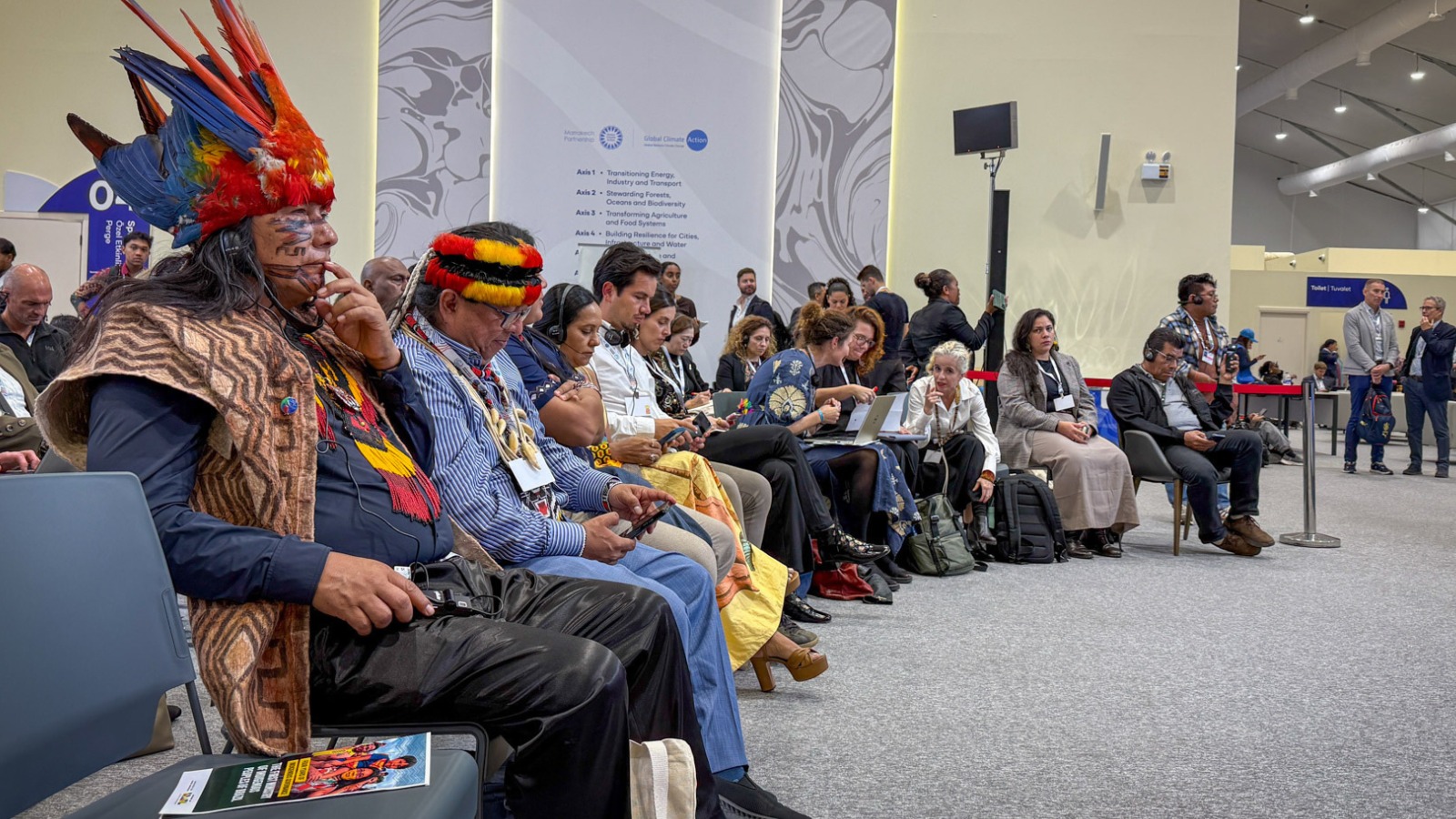
The plenary has ended. Decisions return to our land and territory
At the closing plenary, the Parties did not reach consensus on the Antalya Pact. One reason for the opposition was that the draft omitted fossil fuels. COP31 ended without agreement on a common pathway to move away from them. Nor was agreement reached on the mitigation work programme, in which we, as Indigenous Peoples, sought to include consent and tenure rights. What appeared in the drafts of the pact reflects what was contested over those two weeks. None of those passages became a decision simply because it reached the plenary. [1, 2, 7]
The Caucus spoke forcefully at the close of the conference. It recalled the threats faced by those who defend lands and waters and challenged the promotion of carbon capture technologies and nuclear energy while the transition away from fossil fuels is postponed. There is a reason to bring these concerns together. Those of us who live in the territories face both the consequences of continued extraction and those of a transition in which decisions are once again made on our behalf. [7]
Was Antalya the worst COP in recent years? We do not have sufficient grounds to say it was the worst. What we can say as Indigenous Peoples is that COP31 failed to reach a crucial decision: governments returned to their countries without agreeing on how to move away from oil, coal and gas. In the just transition negotiations, we succeeded in securing explicit references to our knowledge systems and to free, prior and informed consent. Yet when those same governments discussed the minerals they need for the energy transition, they omitted the explicit reference to the consent of the Peoples in whose territories those minerals may be extracted. That is our assessment of Antalya: States made more progress in recognising what we know about our territories than in agreeing on how they will respect our decisions about what happens within them.
That difference is evident in three decisions. When industrial transformation was discussed, free, prior and informed consent was included in the text. When the discussion turned to the minerals extracted to sustain that transformation, the relevant paragraph remained silent on that right. In measuring adaptation, there will be spaces where we can explain what a drought does to the life of a People, but States retained the authority to nominate members of the technical group and the Caucus was left without its own means of doing so. And at the Green Climate Fund, our direct access was mentioned once again, without agreement with us on the procedure we had requested to finance our own responses.
For our Peoples, knowledge comes with responsibility. Those who know when a river is changing are also accountable to their community for the care of its waters. If that knowledge is used to inform climate policy, it matters who decides how it is used, who can give consent to a project affecting the river and who manages the resources to protect it. Our authority to take part in these decisions stems from the self-determination of our Peoples. What we demanded in Antalya was that governments respect that authority when drafting the rules for climate action as well. [7, 9]
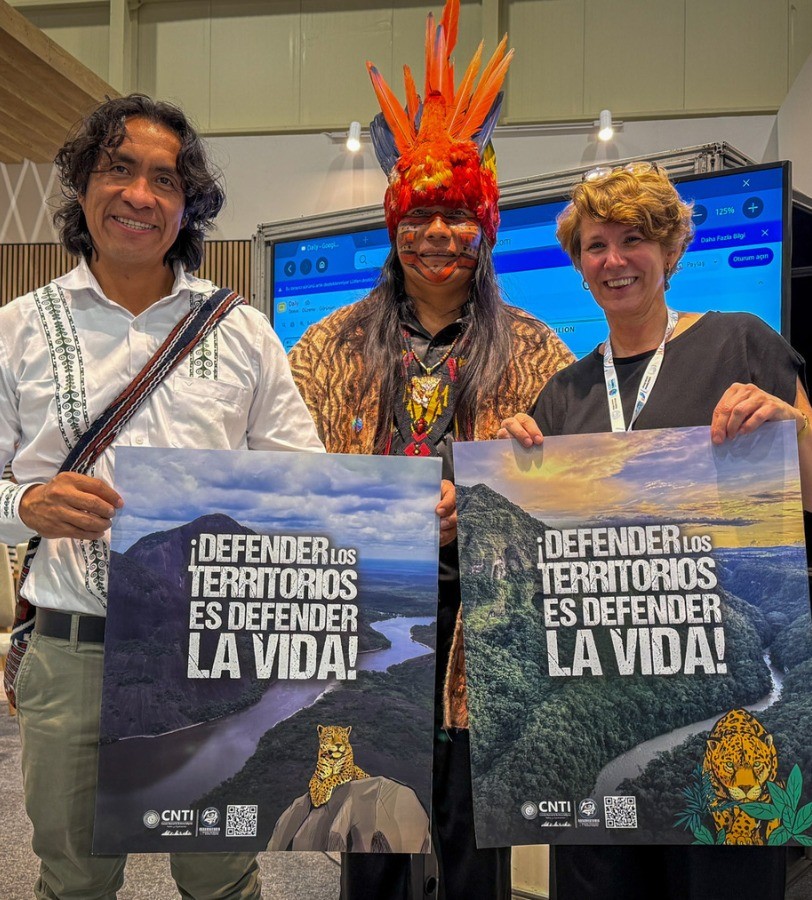
As the Indigenous Technical Secretariat of the National Commission on Indigenous Land and Territory (CNTI), we brought to Antalya the collective voice that the Indigenous organisations comprising the Commission and their delegates have been developing from their territories within this forum for dialogue and consensus-building. Our role was to bring their proposals into the discussions and provide technical support in defending them. It is on the basis of that collective work that we assess the outcomes and follow up on what remains unresolved. When the rules of the just transition mechanism are defined, we will see whether we, the Indigenous Peoples of the seven sociocultural regions, will be able to appoint our own representatives. When climate funds report on their activities, we will ask how much funding reached the territories and how much our authorities and organisations were able to manage directly. And if a government invokes the Antalya decision to advance an industrial project in an Indigenous territory, it will have to explain, before approving it, how it will consult that People through its own authorities to obtain its free, prior and informed consent. We return with the responsibility to report back to the organisations and their delegations on the proposals we brought, what made it into the agreements and what we must continue to defend.
Ultimately, we can say that governments failed to agree on concrete decisions about how to move away from oil, coal and gas. Continuing to postpone that decision has grave consequences for the planet. While a company may continue to profit from the exploitation of nature, a People that loses its water source has to work out that very day how it will survive from then on. The States that have benefited most from the fossil fuel economy must assume their historical responsibility. It is their responsibility to reduce their emissions, make resources accessible to those already suffering the impacts of the climate crisis and respect the right to self-determination of the Peoples whose territories are at risk.
As Indigenous Peoples, we call on society as a whole to continue organising together and demanding that governments act urgently to curb global warming. Every fraction of a degree of warming we manage to prevent matters. So does every decision we make to protect the rivers, forests and soils on which our survival and continuity as Peoples depend. We will continue to defend our territories, even when doing so means confronting the interests of a government or a company. The responsibility to defend life is one we all share. If we continue to accept that the profits of a few justify the destruction of the conditions that sustain life, we put our own survival as humanity at risk.
Defending land and territory means defending life!
Sources and reading notes
- United Nations. Closing of COP31, 23 November.
- UNFCCC. Final draft of the Antalya Pact, not adopted.
- Mongabay. Assessment featuring testimonies from the Caucus, 24 November.
- UNFCCC. Just transition work programme, FCCC/PA/CMA/2026/L.24, paragraphs 7 and 19–21.
- Earth Negotiations Bulletin. Final report and background on Belém.
- UNFCCC. Global goal on adaptation.
- UNFCCC. Guidance to the Fund for responding to Loss and Damage.
- IIPFCC. Interactive Pavilion programme and access to the weekly programme.
- IIPFCC general principles, finance position of 10 November, response to the 19 November draft, closing statement of 22 November and informal finance assessment of 10 November. Joint letter on adaptation and regional proposal for representation criteria.
- Count of activities in the IIPFCC Indigenous Peoples’ Pavilion weekly programme.
- United Nations Declaration on the Rights of Indigenous Peoples, articles 3, 18 and 32. General Assembly resolution 61/295.